
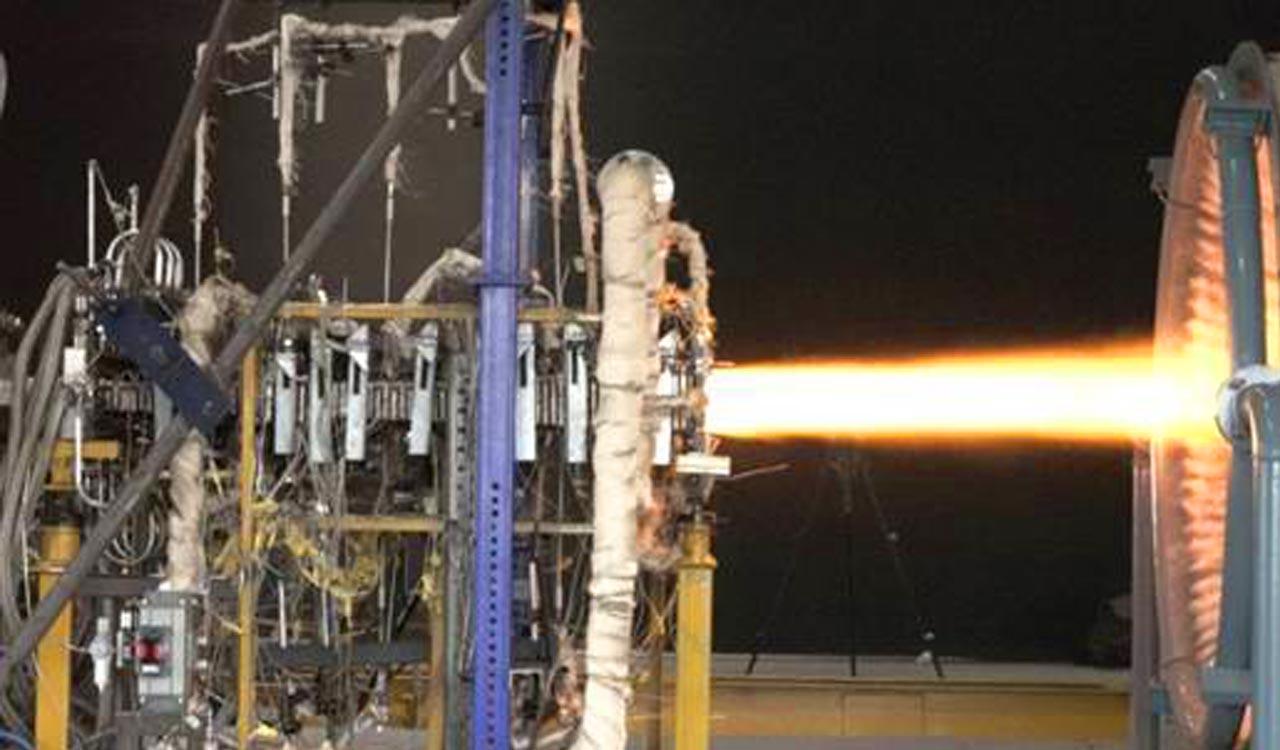
The Expert Take: Scramjet Success Drives Hypersonics Forward
In our experience guiding advanced aerospace engineers and working with defense technology teams, few milestones are as pivotal as a nation proving reliable scramjet performance. The recent long-duration test by DRDO isn’t just an engineering win—it's a signal that India is moving toward the global forefront of hypersonic propulsion. For anyone training in propulsion, embedded systems, or real-time control, this event redefines the landscape of what’s possible in aerospace engineering and related tech careers.
What Happened & Why It Matters
India’s Defence Research and Development Organisation (DRDO) announced the successful completion of a full-scale, actively cooled scramjet combustor test, which ran for an impressive 1,200 seconds (20 minutes). This test, conducted in Hyderabad, marks a significant leap in India’s Hypersonic Cruise Missile Development Programme—putting the nation in an elite group with demonstrated hypersonic propulsion capabilities. Scramjets, or supersonic combustion ramjets, allow air-breathing engines to operate efficiently at speeds above Mach 5, a feat only achieved by a handful of nations so far.
This isn’t just a defense story. The ability to sustain a scramjet combustor for 1,200 seconds signals progress toward reliable, reusable, and cost-effective hypersonic flight systems. These breakthroughs have broad implications for both military and civilian aerospace, affecting everything from rapid global logistics to next-generation space access. For tech professionals, this milestone means new opportunities for hands-on work with cutting-edge propulsion, high-speed materials, and control systems.
The Technical Reality: What Engineers Need to Know
Let’s break down the technological significance of a 1,200-second actively cooled scramjet combustor test. Traditional ramjet engines operate efficiently only up to about Mach 4, but scramjets (Supersonic Combustion RAMJETs) are designed for speeds that far surpass this, typically Mach 5–15. The active cooling system referenced here is crucial—at hypersonic speeds, engine components can reach temperatures above 2,000°C. Without active cooling, material failure is almost guaranteed.
DRDO’s success suggests they’ve overcome key challenges in fuel injection, combustion stability, and thermal management. For context, the NASA X-43A’s scramjet engine test flights in the early 2000s lasted less than 15 seconds at Mach 9.7, and Russia’s Zircon missile reportedly achieves similar durations in field use. Achieving 1,200 seconds of stable operation is an order-of-magnitude leap, implying breakthroughs in:
- Thermal barrier coatings and regenerative cooling (often using the fuel itself as a coolant before combustion).
- Computational Fluid Dynamics (CFD) for modeling supersonic combustion and shockwave interactions—expect heavy use of tools like ANSYS Fluent, OpenFOAM, and custom in-house solvers.
- Advanced sensor fusion and real-time data acquisition for monitoring combustor health and performance under extreme conditions.
- Integration with control systems, often using embedded C/C++ and real-time operating systems (RTOS) to maintain combustion stability despite fluctuating air and fuel flows.
From an implementation perspective, engineers need to understand both high-level system architecture and low-level details. For example, fuel injection timing and geometry are typically managed by algorithms that respond to sensor data in microseconds. Here’s a simplified pseudocode concept for active cooling control in a scramjet environment:
if (combustor_temp > max_safe_temp) {
    increase_fuel_coolant_flow();
    reduce combustion intensity;
}
else if (combustor_temp < optimal_temp) {
    decrease_fuel_coolant_flow();
    increase combustion intensity;
}
log_cooling_data();
In real-world applications, these controls are implemented with robust fail-safes and redundancy—think dual redundant sensors, watchdog timers, and real-time health monitoring algorithms. The test also implies advances in high-speed data logging, possibly leveraging Field-Programmable Gate Arrays (FPGAs) for deterministic performance. Compared to legacy missile propulsion systems, which relied on solid or liquid propellants, scramjets require a much tighter integration of hardware, software, and materials science.
For engineers, this test signals that hands-on skills with high-temperature alloys, real-time embedded software, and CFD are increasingly relevant. It also sets a new benchmark for future projects—hypersonic systems will be expected to demonstrate not just burst performance, but sustained, reliable operation under extreme conditions. For more on scramjet principles, see NASA’s educational overview.
Why This Directly Impacts Your Tech Career
The implications for your career are immediate and profound. Hypersonic propulsion is now a priority for defense, aerospace, and advanced manufacturing sectors—and nations are ramping up hiring to fill the talent gap. If you’re a Software Engineer, Embedded Systems Developer, Materials Scientist, or Data Engineer, these developments mean your specialties are in higher demand than ever.
Over the next 12-24 months, expect a sharp uptick in demand for professionals who can work on high-performance embedded systems, develop or simulate complex thermodynamic models, or integrate real-time telemetry pipelines. Defense contractors, national research labs, and private aerospace firms (like ISRO, DRDO, Bharat Dynamics, and international players such as Lockheed Martin and Raytheon) are all expanding their teams. Don’t overlook adjacent industries: fintech and healthtech are already leveraging high-performance computing and materials research, and the techniques proven in hypersonics often migrate into automotive, energy, and advanced manufacturing.
The salary landscape reflects this demand. In India, aerospace engineers with hypersonics experience can command 30–50% higher compensation than peers in traditional aerospace roles; in the US or Europe, that premium can be even higher (see Glassdoor Aerospace Engineer Salaries). For software and systems engineers with embedded and real-time control experience, the numbers are similarly strong. If you want a career at the intersection of software, physics, and mission-critical systems, now is the time to position yourself.
Skills You Should Build Right Now
- Computational Fluid Dynamics (CFD) Simulation — Scramjet and hypersonic propulsion rely heavily on accurate flow modeling. This news means hands-on CFD with tools like ANSYS Fluent or OpenFOAM is now a core skill. Learning path: Complete a CFD specialization and run simulations of supersonic flows.
- Embedded Real-Time Systems — Controlling combustor cooling and fuel flow in real time requires mastery of embedded C/C++, RTOS, and sensor integration. Learning path: Build and deploy a temperature-controlled system on an STM32 or Raspberry Pi using FreeRTOS.
- High-Temperature Materials Engineering — Understanding and applying ceramics, alloys, and thermal barrier coatings is essential for hypersonic viability. Learning path: Take a course on aerospace materials or join a university lab project on high-temp alloys.
- Data Acquisition & Signal Processing — Hypersonic tests generate massive data streams. Skills in high-speed DAQ, FPGAs, and Python/Matlab signal processing are sought after. Learning path: Complete an online FPGA or DAQ bootcamp and build your own multi-sensor logger.
- System Safety & Redundancy Engineering — Mission-critical systems must not fail. Learn about fail-safe design, redundancy patterns, and aerospace certification (DO-178C). Learning path: Start with MIT OpenCourseWare’s safety-critical systems lectures.
- Defense Project Lifecycle Management — Understanding how large-scale government R&D projects progress gives you an edge in interviews and promotions. Learning path: Read DRDO’s project management case studies or take a defense systems course.
Interview Preparation: Questions to Expect
- Explain how a scramjet differs from a traditional ramjet or turbojet engine. — Focus on the supersonic combustion process, lack of moving parts, and operational speed regimes.
- Describe an embedded control algorithm you would use to manage combustor temperature during sustained hypersonic flight. — Reference sensor feedback loops, real-time OS considerations, and safety redundancies.
- Tell us about a time you worked on a high-reliability or safety-critical system. How did you handle unexpected data or component failures? — Use STAR (Situation, Task, Action, Result); emphasize testing, redundancy, and rapid response protocols.
- What materials challenges are unique to hypersonic vehicles, and how are they addressed? — Discuss thermal shock, oxidation, and the use of ceramics, superalloys, and active cooling strategies.
- How would you validate CFD models against real-world test data in a scramjet project? — Talk about test correlation, sensor calibration, and iterative refinement.
SupportMeTechs Perspective
From our vantage point mentoring engineers and students entering aerospace and defense, we see this as a defining moment. Scramjet technology isn’t theoretical anymore—it’s a practical, testable system. At SupportMeTechs, we’ve redesigned our live sessions and project tracks to include real-world hypersonic propulsion challenges, from CFD simulation labs to embedded system implementation. Our best student outcomes always come from hands-on, multidisciplinary learning—if you’re serious about entering this field, you need more than theory. Work on actual code and hardware, and seek mentorship from practitioners who’ve built these systems. That’s how you’ll stand out as India (and the world) enters the hypersonic era.
3 Things You Can Do This Week
- Download and run a basic supersonic flow simulation using OpenFOAM—start with the tutorial cases and tweak parameters to see shockwave effects.
- Build a temperature monitoring system with real-time alerts using a microcontroller (like Arduino or STM32), simulating active cooling control logic in code.
- Read the open-access IEEE paper on scramjet combustor testing to understand experimental setups, instrumentation, and validation methods used in current research.
Frequently Asked Questions
What is a scramjet, and how does it work?
A scramjet (supersonic combustion ramjet) is an air-breathing engine designed for hypersonic flight—typically operating efficiently above Mach 5. Unlike traditional jet engines, scramjets have no rotating compressor or turbine. Instead, they compress incoming air using vehicle speed and shockwaves, then mix it with fuel for supersonic combustion. The entire process occurs at extremely high temperatures, requiring advanced materials and cooling systems. For a detailed breakdown, see NASA’s explanation of scramjets.
Why was the 1,200-second combustor test significant?
Most previous scramjet tests lasted only a few seconds to a few dozen seconds, limited by materials, cooling, or combustor stability. India’s 1,200-second (20-minute) test demonstrates not just the ability to ignite and sustain supersonic combustion, but also to manage heat and stresses for durations relevant to operational missile or space launch missions. This level of endurance is a breakthrough for real-world hypersonic systems, positioning India among the global leaders in the field.
How can an engineering student get involved in hypersonic technology?
Engineering students can start by building a foundation in fluid dynamics, thermodynamics, and embedded systems—courses and hands-on projects are widely available online. Participating in university aerospace clubs, entering design competitions (like SAE Aero Design or Spaceport America Cup), and seeking internships with aerospace or defense organizations are excellent steps. At SupportMeTechs, we encourage students to work on simulation projects, embedded control prototypes, and to network with mentors active in hypersonic R&D to maximize their career potential.